To celebrate the launch of Obsidian, we have a mix of events happening today, Saturday 9th May, from video interview premieres, live Q&As, a space quiz and more…
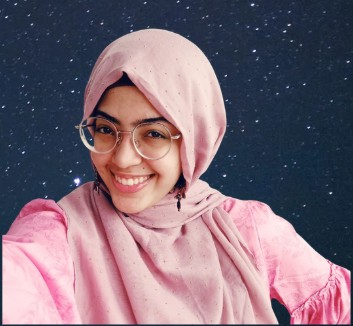
Author of novella Destination: Opportunity – Aatiqa Mankani – has kindly agreed to answer some questions about her writing.
Your story in Obsidian explores the psychological toll of isolation in space. What initially drew you to that emotional landscape?
A: I confess to drawing inspiration from personal experience. Moving from my hometown to where I am now, in Vietnam, came with the kind of loneliness that comes from being away from your community while you adjust to a new kind of life. In its own way, a new place can feel like space—foreign, faraway. So writing Destination: Opportunity was almost cathartic in how I could channel the isolation I felt into something concrete on paper.
When writing science fiction, do you start with the world, the character, or the central emotional conflict?
A: For me, the central conflict takes precedence. I cannot really begin to write a story unless I have a strong idea of what the central emotion and act is that will define and characterize the aspects of my characters’ lives. Worlds are relatively easier to craft, although every now and then I will spend ages locked into a tussle with a plot that refuses to cooperate, but once my central themes are pinned down, I find the characters are themselves borne from it.
Space in your story feels both vast and claustrophobic. How did you approach crafting that duality?
A: That’s a lovely question. Personally, when I was deciding how to balance the two extremes, it came down to control. The stakes of claustrophobia, for instance, don’t feel too high until the control is wrenched from the person and they are, shall we say, locked into some cramped space. So my characters ended up being stranded in an environment where they were very vulnerable, very far from home, and essentially without control over their own lives. I think the lack of autonomy played well into space feeling both like a glorious world yet unexplored, and at the same time, a sort of prison.
Were there any real-world scientific concepts or cultural influences that shaped your narrative?
A: Many little ones, yes! My narrative revolves around spacefarers dealing with a reduced ability to sleep, which is something astronauts do actually go through, due to disrupted circadian rhythms. Yet another fact is that as you go deeper into space, entropy, which is essentially overall disorder, increases. So much trivia that I know made it into a story.
Obsidian as a theme suggests sharpness, reflection, and hidden depths. How did that motif influence your story’s tone or structure?
A: I would say it was the ‘hidden depths’ aspect of Obsidian that came into play the most. Almost all of the characters in the story had something they were hiding: personal feelings (whether they were hiding those from others or themselves), political motives, or life-changing secrets. I like to think that by the time the tale draws to an end, every prominent character has revealed a secret side of them to the readers.
What was the most challenging aspect of writing this piece — the science, the psychology, or the atmosphere?
A: Can I choose ‘none of the above’ and opt for the fourth option, which is the characters themselves? (Absolutely! – Donna) I was surprised myself at how well the plot and the science appeared to cooperate, only for my characters to come rolling into the fray and adjusting all of my carefully laid plans to their liking. The initial draft looked so different from the final version that made its way—with many thanks—into the Obsidian anthology. Fleshing out the characters into forms of themselves that would make sense for the story they were in.. that was a challenge, with this piece.
Your characters grapple with internal fractures as much as external threats. How do you balance introspection with plot momentum?
A: With many, many rewrites. A good rule of thumb I like to abide by in tightly-paced stories is that my characters should never get a break that isn’t a false flag. Life should always be on the move for them. Another thing I like to do is to conflate their internal struggles with the external dangers: in real-life, long-term danger, people don’t always compartmentalize well enough to separate the two types of problems, and I like reflecting that in my characters. I would also say that choosing the voice of the story was very important, because the first-person narrative gave me a lot of room to show my character introspecting amongst all the chaos.
Did writing this story change your own perspective on solitude or confinement?
A: I have much of the same opinions that I did prior to writing this narrative, but I do feel like the writing process compounded those opinions, in a sense. Isolation in excess can be a dangerous thing. Community is important for us as humans. I’ve become an even bigger believer in forging a community for oneself.
If readers take away one lingering question or feeling from your story, what do you hope it is?
A: That no matter how deeply entrenched into our way of life our oppressive systems can feel, there is always a way to fight that oppression. There is always a reason to choose life for yourself and your neighbour over needless self-sacrifice. I hope that sentiment, above all else, stays with them.
What’s next for you creatively — are you continuing in the realm of dark sci‑fi, or exploring new directions?
A: It was a pleasure to write this story, and I will definitely surf the tides of dark sci-fi again, but in the immediate aftermath I think I shall explore some magical realism, some darker fantasy. And then I will return to some more of this genre again!
Thank you so much, Aatiqa! – Donna
 The Slab Press